Bank Foreclosures in Dubai: Complete Buyer’s Guide
Bank foreclosure properties in Dubai offer some of the biggest discounts in the real estate market, often ranging from 15% to 40% below market value for motivated buyers. These deals arise when owners default on mortgage payments and lenders repossess the property to recover outstanding loans.
For investors, end-users, and overseas buyers, foreclosures can unlock premium properties at reduced prices, but they also involve strict legal processes, fast timelines, and higher due diligence requirements.
This comprehensive guide explains everything you need to know before buying a bank-repossessed distress deal property finder in Dubai.
What Is a Bank Foreclosure Property?
A foreclosure occurs when a property owner fails to meet mortgage obligations, prompting the bank to take legal possession and sell the asset to recover its funds.
These properties are also known as:
- Bank-owned properties (REO)
- Repossessed homes
- Mortgage default properties
- Distressed assets
Such situations typically arise when investors become overleveraged or face financial hardship, forcing lenders to recover loans through asset liquidation.
Because the bank’s priority is debt recovery rather than profit, these properties are frequently priced below comparable market listings.
Why Foreclosure Deals Exist in Dubai
 Dubai’s investor-driven property market occasionally produces distressed situations, especially during economic shifts or liquidity crises.
Common causes include:
Dubai’s investor-driven property market occasionally produces distressed situations, especially during economic shifts or liquidity crises.
Common causes include:
- Mortgage default
- Job loss or income disruption
- Investor over-leveraging
- Business failure
- Legal disputes
- Market corrections
Distressed or urgent sales occur when owners must liquidate assets quickly, often resulting in below-market pricing.
Potential Savings: How Cheap Are Foreclosures?
Most foreclosure and bank-owned properties in Dubai sell at:
15%-40% below market value (depending on urgency and condition)
Some auction sales may offer even larger discounts, particularly for properties requiring renovation or immediate settlement.
These discounted prices create strong opportunities for capital appreciation and rental yield once market value stabilizes.
Where to Find Bank Foreclosure Properties in Dubai
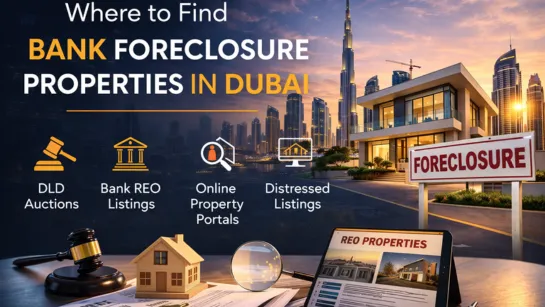 Unlike traditional listings, foreclosure deals are not always widely advertised.
1. Government and Court Auctions
Many repossessed properties are sold through official auction platforms.
Auctions are a primary channel for banks to dispose of seized assets quickly, often attracting serious investors seeking discounted opportunities.
Some auctions take place online, while others occur in person.
2. Specialized Property Auctions
Private auction houses also handle bank-repossessed real estate.
Companies experienced in foreclosure sales regularly offer both online and on-site bidding options for investors.
3. Bank Sales Platforms
Certain banks list repossessed properties directly to recover outstanding loans. Monitoring these platforms can reveal early opportunities before public marketing begins.
4. Real Estate Portals
Major UAE property portals sometimes feature distressed or repossessed listings alongside standard properties.
Distressed properties are typically sold at reduced prices due to financial hardship, attracting investors seeking high-value opportunities.
5. Specialized Brokers and Investment Firms
Experienced agents often have access to off-market foreclosure inventory through lender relationships.
This channel frequently offers the best deals, and the least competition.
Legal Process of Buying a Foreclosed Property
Dubai’s foreclosure process is structured and governed by clear legal frameworks.
Typical steps include:
- Bank initiates legal proceedings after default
- Court authorizes repossession
- Property valuation is conducted
- Asset is listed for auction or sale
- Winning buyer completes payment
- Ownership transfer through Dubai Land Department
The regulatory framework is designed to protect both lenders and buyers while ensuring transparent transactions.
Financing Foreclosure Purchases
Financing options vary depending on the sale method.
- Auctions often require immediate payment or large deposits
- Mortgage approval may be needed in advance
- Cash buyers have a strong advantage
Preparation is crucial because foreclosure deals move quickly.
Key Risks to Consider
Not every foreclosure is a bargain.
Potential challenges include:
- Outstanding service charges
- Property condition issues
- Tenant disputes
- Legal complications
- Limited inspection opportunities
- Short payment deadlines
While many bank-owned properties have clear titles, careful due diligence is essential before committing.
Tips to Secure the Best Foreclosure Deal
Successful buyers typically follow these strategies:
- Research market prices in the area
2. Arrange financing before bidding
3. Work with foreclosure specialists
4. Inspect property condition carefully
5. Verify legal status and debts
6. Be ready to act quickly
Foreclosure purchases reward preparation, not hesitation.
Who Should Buy Foreclosed Property?
Foreclosure deals are ideal for:
- Real estate investors seeking high ROI
- Cash buyers looking for discounts
- Experienced property buyers
- Renovation investors
- Long-term capital appreciation seekers
First-time buyers can also benefit, provided they receive professional guidance.
Final Thoughts
Bank foreclosures in Dubai represent one of the most powerful ways to acquire premium real estate below market value. However, these opportunities come with complexity, urgency, and risk.
Buyers who combine strong due diligence, financial readiness, and expert support can secure exceptional deals in one of the world’s most dynamic property markets.
Related: Top 5 Areas for Distressed Properties in Dubai | Distress Property Due Diligence ChecklistExplore more Dubai distress deals
Distress Properties · Communities · Areas in UAE · Developers · Guides